
Clemco
Blast Nozzle
The blast nozzle is a critical component in abrasive blasting systems, serving as the point of exit for the abrasive media propelled by compressed air or other means. It plays a crucial role in controlling the direction, velocity, and pattern of the abrasive stream, ultimately determining the efficiency and effectiveness of the blasting process. Cl...
Price on request
Final pricing, availability and delivery are confirmed in your quotation.
Review My Cart →Product overview
The blast nozzle is a critical component in abrasive blasting systems, serving as the point of exit for the abrasive media propelled by compressed air or other means. It plays a crucial role in controlling the direction, velocity, and pattern of the abrasive stream, ultimately determining the efficiency and effectiveness of the blasting process. Clemco, a prominent manufacturer in the abrasive blasting industry, produces a wide range of blast nozzles designed to meet diverse blasting requirements.
The design of Clemco blast nozzles typically features a hardened inner liner to withstand the erosive forces generated by the abrasive media. This liner is often made from materials such as tungsten carbide or boron carbide, renowned for their exceptional wear resistance and durability. Surrounding the liner is a protective outer jacket, which provides additional strength and helps to dissipate heat generated during blasting.
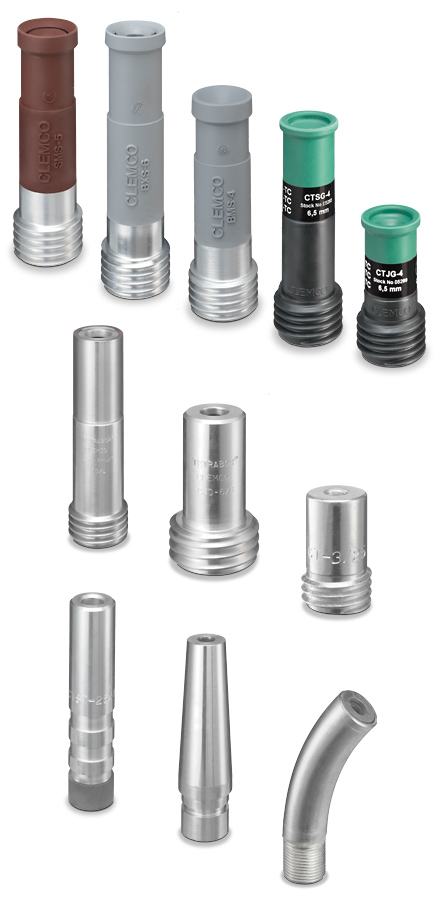
Clemco blast nozzles come in various shapes, sizes, and configurations to suit different applications and blasting conditions. Straight nozzles, angled nozzles, and specialty nozzles with extended reach or narrow openings are among the options available. The choice of nozzle depends on factors such as the type of abrasive media being used, the desired surface finish, and the accessibility of the blasting area.
Clemco blast nozzles come in a wide variety of different liners and nozzle jackets to suit any application and abrasive media. Each nozzle type has been formulated for a specific area of blast application, and the components and construction of each nozzle reflect this specificity.